


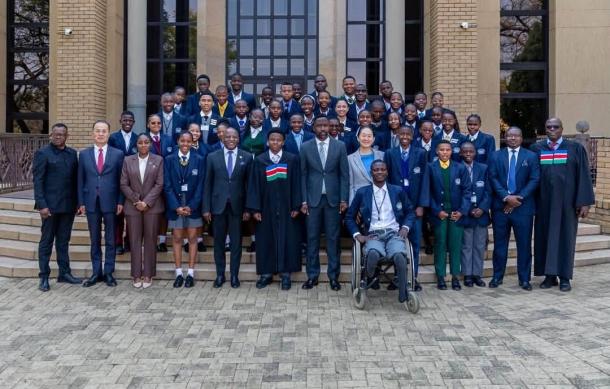
The 4th Junior National Council opened debates with the motion urging the government to invest in child-responsive, climate-resilient water, sanitation and hygiene infrastructure in schools and communities across the country.
Motivating the motion, MP Festus Iita from Omusati Region stated that the motion is not merely a matter of comfort but is a matter of health, dignity, education and human rights.
The motion is supported by the United Nations Sustainable Development Goal 6, which calls for clean water and sanitation for all.
Iita singled out Omusati Region as having higher levels of open defecation and poor hygiene in schools where children spend most of their day.
"In some of the schools, specifically in the Tsandi constituency, learners are using toilets, but those toilets are just holes that are deep inside the toilet. There is no toilet there. There is no toilet brush that you can brush with it, the toilet. By the way, there is no fine gel to wash the toilet pot. There is no soap to wash your own hands, and then there is no water for that matter."
Referencing Ruacana High School in the Omusati Region, Iita said there are alarming reports of toilets without doors, inadequate lighting and insufficient privacy.
This, he stated, raises serious concerns about the dignity and safety of learners.
"You expect a Namibian child who has his own dignity to go do what to go and dress himself in a toilet without a door to change a sanitary pad. How do you think about the boys that are in that school, the discrimination and the willingness to come towards that girl destroying his dignity and his humanity, which will lead to what? To the dropout of school, which will still contribute to the same high rate of unemployment in Namibia."
He recommended the construction of climate-resilient sanitation facilities and the development of solar-powered boreholes.
He also suggested the installation of rainwater-harvesting systems and provision of water-storage tanks at schools that face unreliable water supplies.