



The Ministry of Agriculture, Fisheries, and Land Reform has observed a heavy locust infestation in the Lake Lyambezi belt areas of Muyako to Kapani in the Zambezi Region.
The ministry says the upsurge in locust activity is accompanied by fall armyworms and hoppers, which have appeared following heavy rainfall.
The Chief Agricultural Scientific Officer, Rodrick Maswabi, made and urgent call to farmers.
“What we have observed is that fields that have been weeded show less infestation compared to those that have not been weeded. We therefore encourage farmers to weed their fields as a matter of urgency.”
Senior Agricultural Technician, Zozo Zambwe, said insecticide spraying began early at breeding and feeding sites, but only eight of the expected 100 hectares have so far been covered.
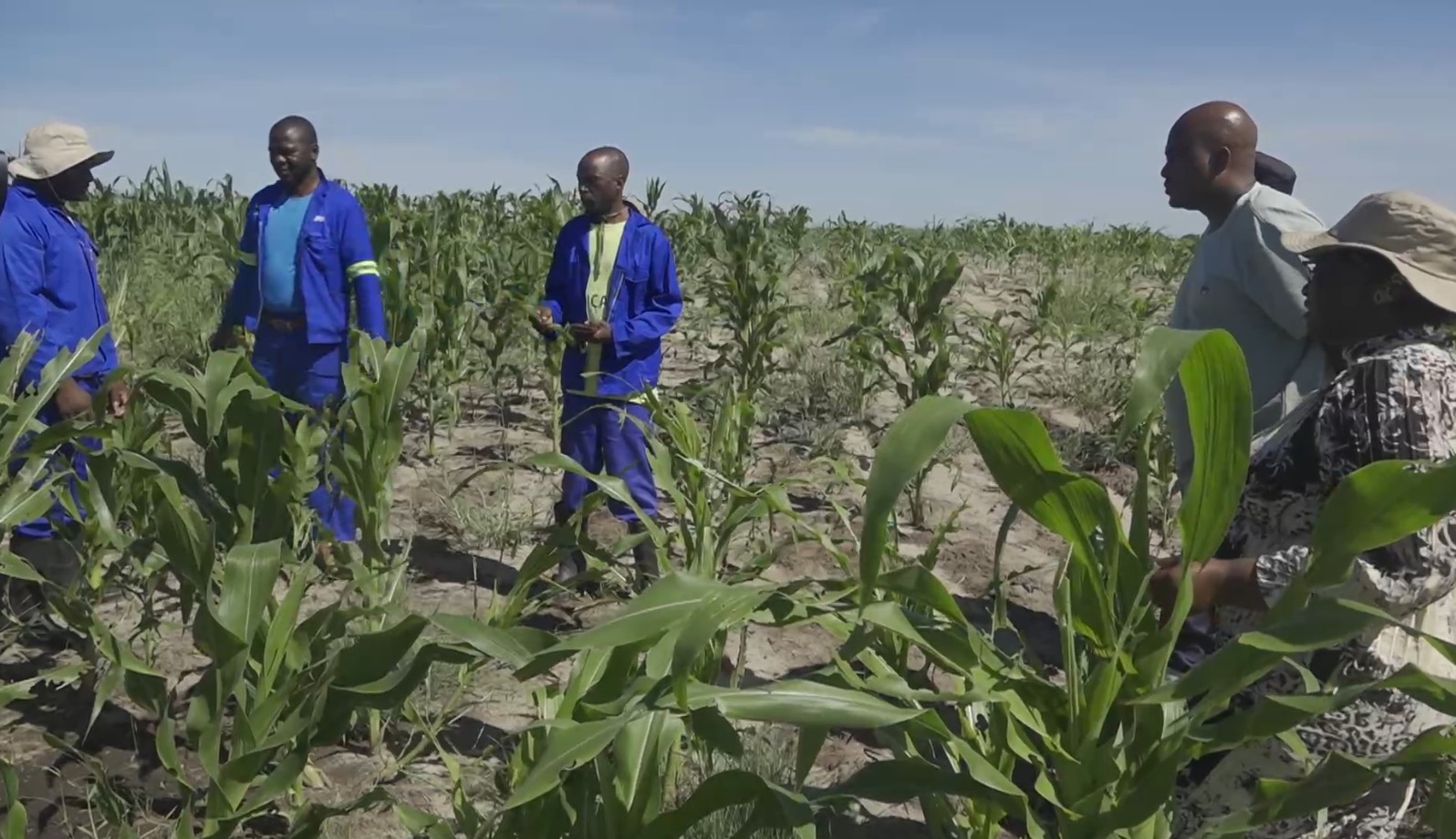
He team is facing challenges, including limited manpower and resources.
“We are fewer than required to carry out this work. There are only three of us, and controlling more than 100 hectares is a challenge. We also only have one mist blower, which makes the task even more difficult.”
The Deputy Director for Plant Health Division, Violet Simataa, said another major challenge is the terrain, which makes it difficult for ground teams to spray deep into fields and surrounding grasslands.
“At this level, we need to revisit our control measures and consider aerial spraying, as it allows for a larger area to be covered in a shorter period compared to ground spraying.”
Deputy Director of the Northeastern Division, Vigorous Kaapehi, outlined the way forward.
“We are looking at the possibility of reinforcing teams by adding more equipment, vehicles, and manpower from other regions. Heavily infested areas can be sprayed aerially, while areas with lighter or scattered infestations can be handled by ground teams.”