

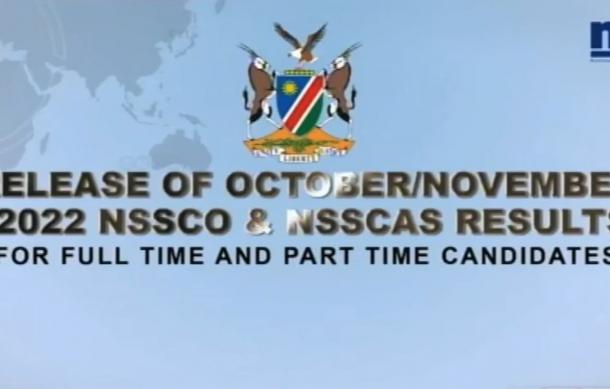
As the nation awaits tomorrow's announcement of the Senior Secondary Certificate Ordinary (NSSCO) and Advanced Subsidiary (NSSCAS) Level results, there is a shared sense of anticipation.
There is hope that the outcomes will reflect significant improvement compared to the past four years.
The announcement of the 2022 Namibia Senior Secondary Certificate Ordinary and Advanced Subsidiary Level results painted a worrying picture, marked by a low pass rate and limited candidate qualifications.
While some attributed the decline to the revised curriculum, others pointed to inadequate teaching resources, overcrowded classrooms, and learner indiscipline.
In 2023, however, the situation showed signs of recovery, with examination results improving by 3.2%.
At the NSSCO full-time level, 29.4% of candidates—representing 11,970 learners—secured 25 points or more in five subjects, reflecting a 14.1% improvement from the previous year.
Additionally, 48.8% attained 20 points or more, qualifying them for degree and diploma programmes at institutions of higher learning—an increase of 3.2% from 2022.
Meanwhile, NSSCAS candidates, both full-time and part-time, continued to demonstrate eligibility for higher education based on their performance in the 2020 and 2021 examinations.
The trend continued in 2024, as performance at the Advanced Subsidiary Level improved from 85.2% in 2023 to 88.1% in 2024 among graded candidates.
A total of 14,084 candidates achieved 25 points or more in at least five subjects, up from 11,970 candidates in 2023 at the NSSCO level.
This represents an overall performance improvement of 5.2%.
In 2024, 53.7% of candidates scored 20 points or more, once again opening doors to degree and diploma studies at higher learning institutions.
As the nation waits in anticipation for tomorrow's results, hope remains that this positive trajectory will continue, not only improving academic performance but also providing a stronger future for Namibia's education system.