


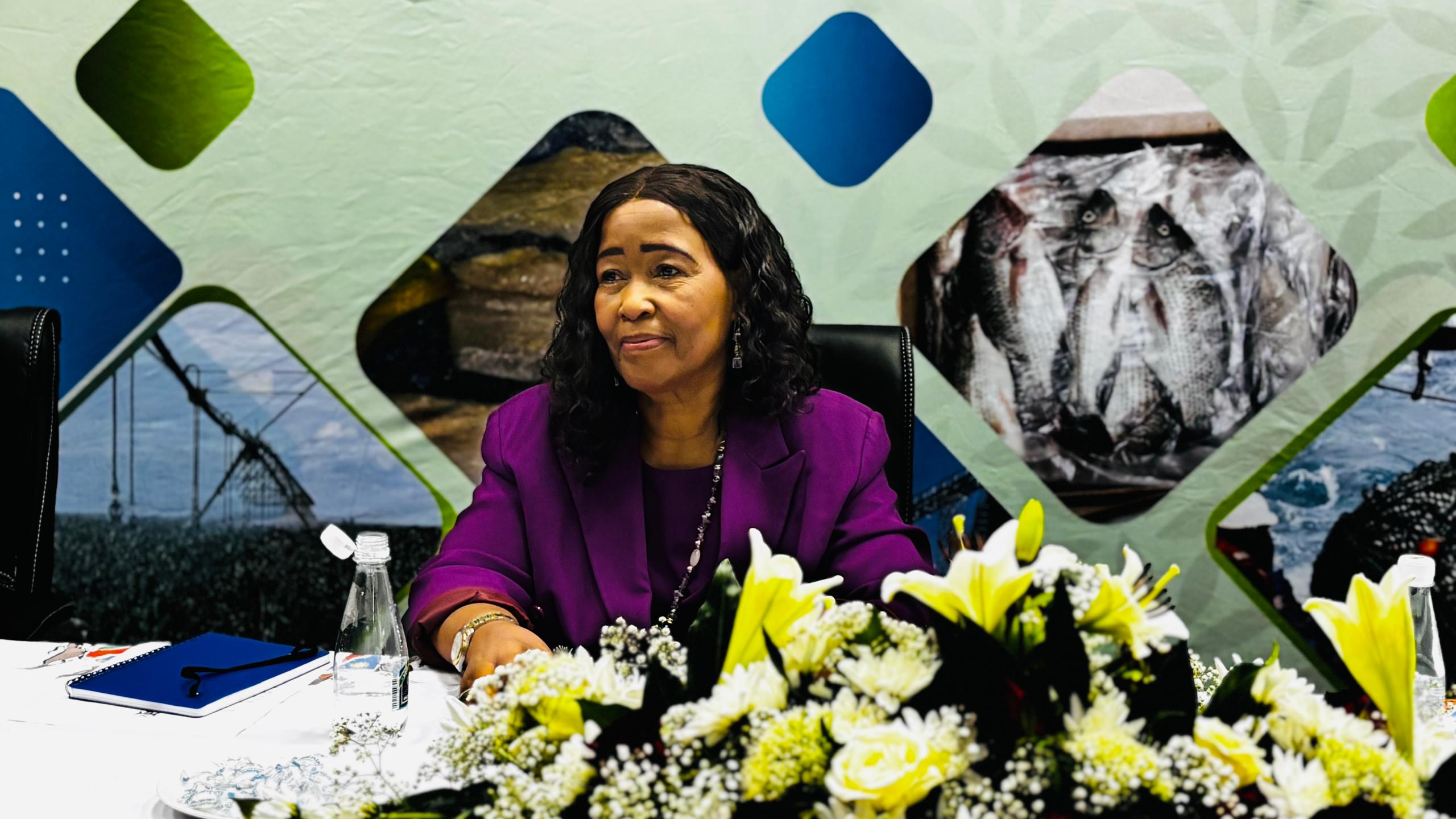
Minister for Agriculture, Fisheries, Water and Land Reform (MAFWLR), Inge Zaamwani, has called on the ministry's staff to shift their performance culture toward impact-orientated outputs rather than input-focused activities.
She urged the ministry's staff to eliminate bureaucratic delays and fast-track procurement processes.
Addressing her staff, Minister Zaamwani stressed the need to avoid wasting time and instead work around the clock to ensure that allocated resources are optimally utilised to achieve the targets set out in the Sixth National Development Plan (NDP6), mainly in improving livelihoods.
She emphasised the importance of strengthening the agricultural sector to achieve a prosperous, self-reliant and food-secure nation and outlined the ministry's 2025/26 strategic pillars and objectives.
These include the sustainable economic transformation of the agriculture, fisheries, water, and land reform sectors, with a focus on improving water security for domestic consumption, agriculture, and industrial use.
Other priorities include ensuring equitable access to natural resources and operational excellence, which aim, among others, to enhance security of land tenure and promote the adoption of climate-smart technologies.
"We also need to transform the way we manage and promote our sectors and begin to use more technology so we have data infrastructure to support the resources. We must also promote our blue economy, and yes, we are doing some work in the blue and green economy, but sometimes we are stagnant. There are so many opportunities in the blue economy. "Revise the policy and see what you can do to promote investment in the sector," maintained Zaamwani.
Emphasising modern resource management, the minister stressed integrating digital systems to boost geospatial planning, monitoring, and secure decision-making.
Key initiatives include the Strategy for the Transformation of the agri-food ector, fostering public-private collaboration for productivity and resilience, alongside policy reviews aligning regulations with national priorities.
Water security, Zaamwani says, remains critical, requiring investments in bulk supply, rural systems, harvesting and storage.