


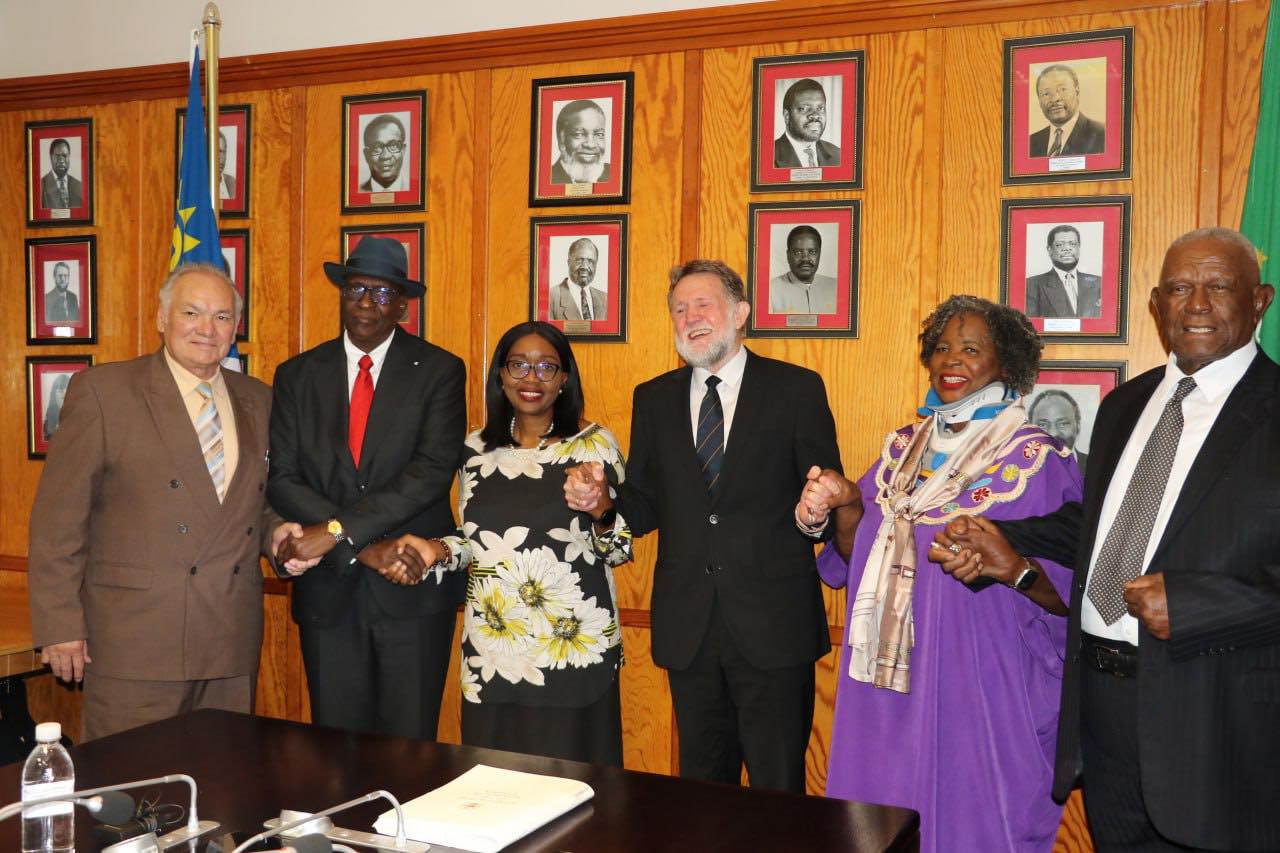
The Namibian Constitution ranks among the world's most progressive supreme laws-safeguarding fundamental rights, freedoms, and the rule of law.
Founding members of the Constituent Assembly reflected on its adoption, noting it was drafted with full awareness of the atrocities Namibians suffered under colonial rule and apartheid.
There is a room where, over 80 days, from the 21st of November 1989 to the 09th of February 1990, Namibia's Constitution was drafted and adopted with a consensus born of dialogue.
The aim was to secure a better future for all generations.
Thirty-six years later, founding members reflected on how the Namibian Constitution came into being, recalling that despite limited time, they succeeded in adopting the document, an achievement that laid a strong foundation for a new nation.
One such member is Pendukeni Ivula Ithana.
“That the Swapo draft constitution be adopted as the working document. It made our work very easy. We looked at constitutions of other countries to replace what was in the Swapo constitution. And that's why we say Namibia got the best constitution in the world. It’s a combination of good ideas from all over.”
Another member, Hartmut Ruppel, commended other members for the role they have played until today.
“Coming together and having more of a constitution office, recognising the potential which is still embedded in the few of us who are still around.”
Dr. Kaire Mbuende highlighted the role parliament plays in informing the youth.
“This parliament should arrange for meetings throughout the regions, where eligible people would organise groups to address young people about the importance of the constitution. Not only the young people, but also police officers don't know the constitution either.”
Another member, Reginald Diergaardt, explained the role he played.
“I recall the issue of public holidays, that we had to decide on how many holidays to have, and of course they did not want Cassinga to be a public holiday because it’s not good for the economy and people must work. I was assigned to defend the position, and I had to go back to history.”
Speaker of the National Assembly Saara Kuugongelwa-Amadhila noted that Namibia has, over the years, recorded significant achievements.
“The parliament reaffirms its commitment to upholding and defending the spirit of the constitution, ensuring that it remains a living instrument that responds to the social and economic aspirations of all Namibians, strengthening constitutional democracy in our country for the president and future generations.”
The late president and chairperson of the Constituent Assembly, Dr. Hage Geingob, and founding president Dr. Sam Nujoma were both honoured and recognised for their leadership and commitment to unity, reconciliation, and constitutionalism.
The founding members also stated that while some members of the Constituent Assembly are still alive, an institution centered on the founding members should be set up.
Fifty-two of the original 72 members of the Constituent Assembly have since died.