


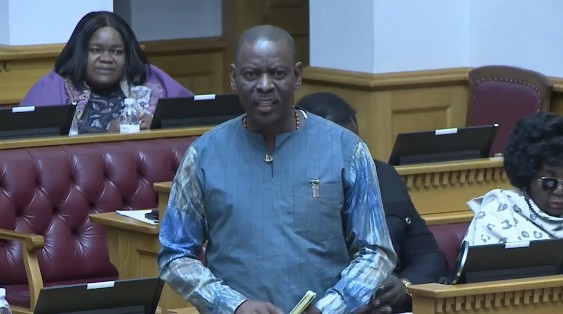
Deputy Speaker of the National Assembly, Phillipus Katamelo, called for stronger collective accountability in the fight against corruption.
He said such responsibility lies not only with leadership but also with all those involved in key appointments and oversight processes.
Katamelo was responding to concerns raised by MPs during contributions to the Anti-Corruption Commission vote.
Katamelo raised concerns over errors within the motivation speech for the ACC vote, clarifying that references to "entertainment of politicians" were incorrect and should instead refer to engagement with international counterparts.
Responding to some concerns from MPs on the outdated act of 2003 of the ACC, he assured the house that the government will look at urgent amendments and a stronger policy framework to address evolving corruption risks, particularly in procurement systems.
"We've taken a logical advancement that has taken place. And I'm sure they are saying this with the intention to work on the amendment but also to work on the policy framework of corruption, the way Honourable Amupanda put it. The risk, procurement, Honourable Kambalala, modernised to digital. I think it's one of the things that we need to do as a country. It's not only here but also as a country, even when you follow the court proceedings, be they NamCor or be they whatever the writing is, and so I think we seriously need improvement. I think the minister of justice has done well with the e-justice system, and I'm sure it's something worthwhile to achieve."
He stressed that corruption cannot be tackled through legislation alone, arguing that ethical conduct and moral responsibility are equally critical.
Concerns were also raised about inequalities in the justice system.
Katamelo warned that individuals with financial resources can delay cases through legal tactics, while ordinary citizens cannot.
All I'm saying is corruption happens everywhere; others are just a legal way to hide it, and that's where the moral aspect comes in. If I have to donate shares, there is no other way to donate a house for a wedding. It can only, but the others use company taxes to elicit transactions, and that's why ACC, in terms of research, also needs to move up and be at 11. Two, that one is also for us; I think 'honourable' is as he mentioned it, the honourable Karonda tribe, the man at which we bring corruption cases to the tribe. See, if we say 'corruption', we should treat it as three sayings. If you want to succeed, you don't use the same process of trialling a three, say, you understand. But what is that? That is also our goal. If we have to define corruption in three ways, then we also need to come up with measurements and instruments that will complement those three ways in terms of the tribe."
Among the proposals put forward were the establishment of specialised mechanisms to handle corruption cases, improved incentives for investigators and prosecutors, and the introduction of lifestyle audits to detect unexplained wealth.