


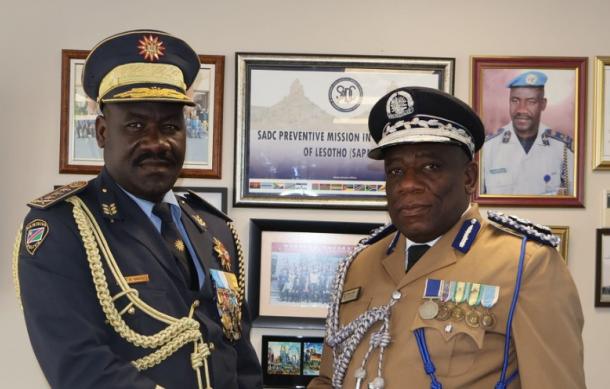
Police Inspector General Joseph Shikongo has said policies and resolutions adopted by the Southern African Regional Police Chiefs Cooperation Organisation (SARPCCO) are producing results, despite persistent political, economic and social challenges facing member states.
The police chief was speaking at a media briefing during the visit of the Southern African Regional Police Chiefs Cooperation Organisation chairperson in Windhoek.
Lieutenant General Shikongo said regional police chiefs remain committed to implementing resolutions taken by the organ's subcommittees and ensuring continued cooperation among SADC member states.
He said while countries in the region face different internal pressures, ranging from financial constraints to political and social difficulties, law enforcement leaders have maintained consistent engagement.
"We'll be hosted by the Chairperson here, who is the Inspector General of the Malawi Police Service. He's going to welcome us, obviously, to go and review what we did in terms of implementation. And then we are going to urge member states to implement those decisions. And the member states will also deliberate also to give us their own reasons why A, B, C, and D were not implemented. Like Namibia is doing here. As a country, we held our own session and implemented approximately 35 decisions, but we faced challenges in their implementation. But obviously, we have to navigate through the challenges. Policies are waking up. We are talking about the issue of policy on human trafficking. Yes, it's reality."
The police chief also highlighted the need for member states to move beyond merely signing regional protocols, particularly those relating to human trafficking and transnational crime, and ensure they are formally ratified through domestic legal processes.
He said ratification would give the decisions legal weight and improve enforcement across the region.
Lieutenant General Shikongo added that SARPCCO continues to assess crime trends across the region and coordinate joint responses to emerging threats.
Member states continued to meet annually, and the next regional meeting is scheduled for June in Malawi.
At the meeting, member states will review the implementation of past resolutions and account for areas where progress has lagged.