


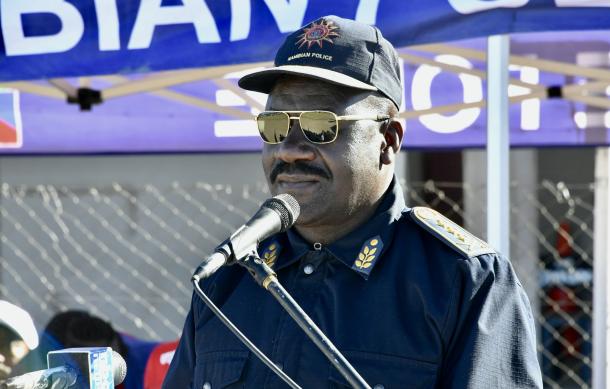
The battle against drugs is no longer being fought only at the borders but is now being fought inside homes, communities, and, in some cases, within the ranks of the police itself. Inspector General of the Police, Joseph Shikongo, says the country has shifted from being a transit route for narcotics to a nation grappling with growing local consumption, particularly among young people.
Lieutenant General Joseph Shikongo says the fight against narcotics cannot be left to law enforcement alone.
Stating that every individual has a direct role to play in stopping the flow of illegal substances.
"If every Namibian today stands up and says no to drugs, there will be no drugs on our streets, because every drug will be reported. But you ask the very fundamental question: How do these drugs get into the country? Yes, they go through our borders."
He says drugs are often brought into the country by citizens themselves and end up being stored in homes by relatives and acquaintances.
Shikongo added that narcotics enter through gazetted and ungazetted borders.
Using the example of the Kazungula border post, which links Zambia and Botswana and serves as a major transit corridor, Shikongo said long queues of trucks make it difficult to inspect every vehicle.
Noting that scanners are not available at all border points and that police and customs officers are often forced to conduct random checks to avoid disrupting trade and business operations.
The police chief also revealed that some members of the police force have been implicated in drug-related activities.
However, he stressed that these incidents are isolated cases and should not be seen as representative of the force as a whole.
The police drug bulletin for the month of March shows that 203 people have been arrested in drug-related cases, of whom 193 are Namibian citizens.