


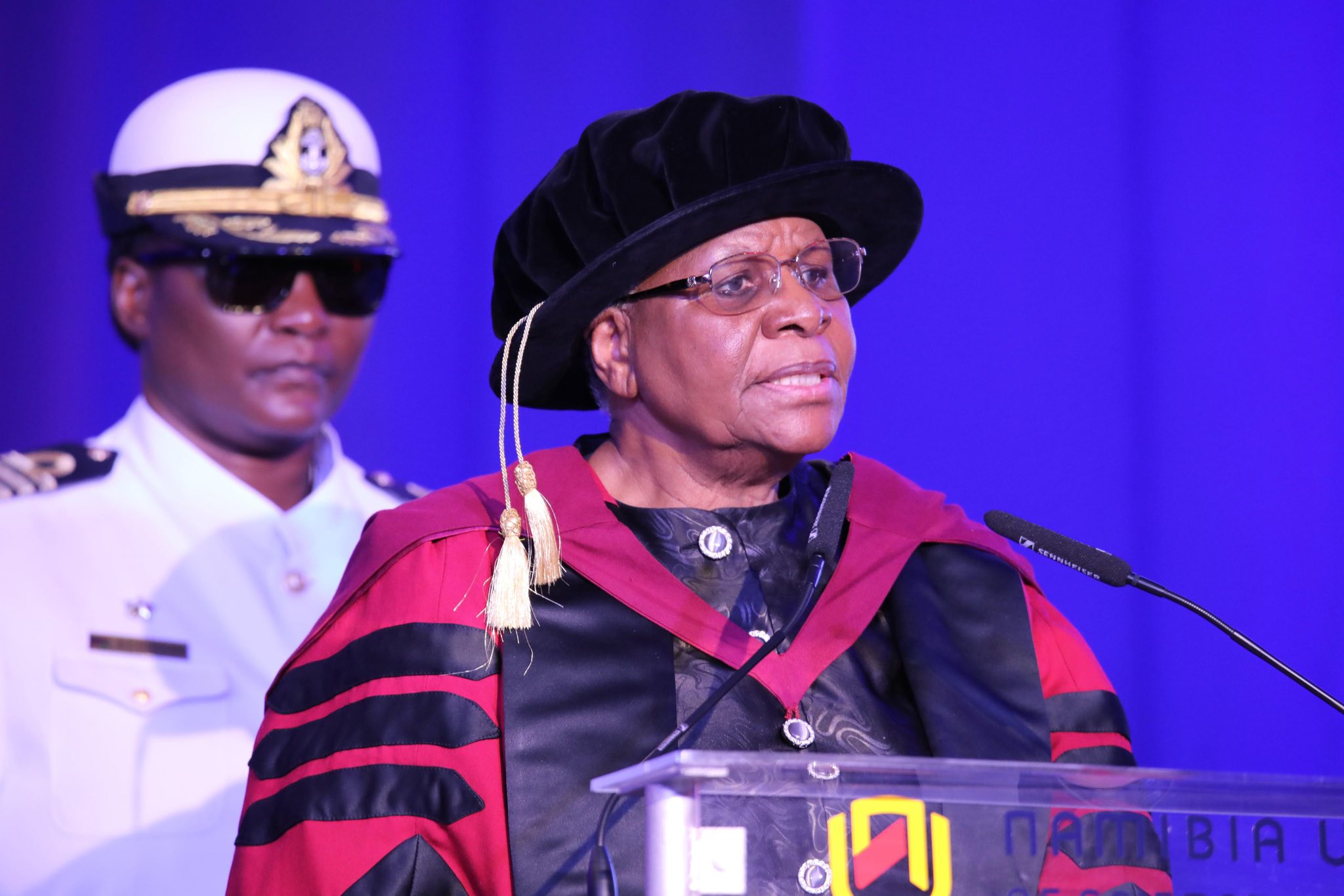
President Netumbo Nandi-Ndaitwah says education, skills training, and human capital remain central to Namibia's development agenda.
Speaking at the 11th graduation ceremony of the Namibia University of Science and Technology, the President called for quality and relevant training that prepares graduates for the needs of the job market and the country's future growth.
Dr. Nandi-Ndaitwah also expressed concern over the growing gender gap in higher education. She said this as female graduates continue to outnumber their male counterparts at graduation ceremonies.
The president noted that while she remains committed to women's empowerment, there is also a need to ensure equality and equal opportunities for all.
She stressed the importance of bringing the boy child on board in the academic world, saying empowering young men is equally important for national development.
Nandi-Ndaitwah called for balanced empowerment efforts to ensure both men and women contribute meaningfully to the country's social and economic progress.
“The message is clear: we must take the issue of the boy child seriously if we are to strengthen our social fiber and economic advancement. In the words of the Namibian First Gentleman, 'while empowering the girl child, the boy child we neglect is the future husband'. As a person who has advanced equality between men and women, I fully agree with the sentiments of the First Gentleman. “We need to liberate the minds of both males and females to see themselves as equal partners in development. Hence, the need to bring the boy child on board in the academic world in our country,” she said.
President Nandi-Ndaitwah further noted that students often face challenges and struggles throughout their academic journey, which can lead to mental health issues.
She encouraged graduates and students to seek support when facing difficulties, stressing that there is no shame in asking for help.
Dr. Nandi-Ndaitwah emphasised the need to create a conducive environment where students and graduates feel safe to share their struggles, seek assistance and access the relevant support needed for their well-being and success.
“Academic excellence and well-being must go hand in hand. However, we must also address ongoing challenges, such as youth unemployment, the mismatch between graduate skills and labour market demands, limited access to capital, and the need for digital transformation.
“Graduates face uncertainties as they transition from academia to the workforce, including difficulties in securing employment and accessing professional networks,” she said.
The President expressed optimism about Namibia's future, especially with most graduates from health faculties, a key priority for her administration.
She affirmed that all Namibians deserve equal access to quality healthcare, noting progress in services essential for productivity and sustainable development.