


"Garlic can be chopped up and then put in these containers. We invite food processors to come to Sikondo to see if we can collaborate on garlic processing. When you look at the garlic in all these retailers, it is mostly imported from South Africa. And it's such a simple crop to grow."
The green scheme started planting half a hectare of garlic and will slowly increase it to 1.5 hectares. Plans are in the pipeline to grow other types of plants.
"Parsley, coriander, you know, some of these herbs that are very expensive and that you don't find fresh in the market. We want to try it also on a very small scale and just to see if that can work."
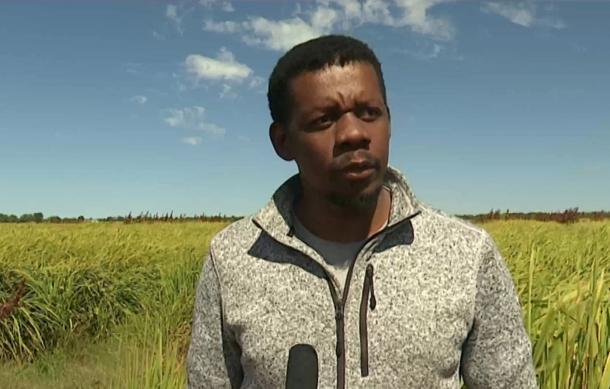
Apart from experimenting with garlic, Sikondo also grew rice under center- pivot irrigation for the first time this year.
The acting farm manager said the rice is growing pretty well, but the Irga variety they are experimenting with takes a very long time for the grains to form.
The rice was planted more than four months ago.
"We have spent a lot of time waiting for the grains to come. I think we need an early maturity variety that allows for approximately 90 days of vegetative growth. You have your leaves, and then after the 90 days, up to 120 days, then you're having your grains, and then you basically harvest."
Rice is consumed in large quantities in Namibia, but the country needs to get the right variety for its climate.
"We want to do three trials. This experiment is the first one. The first trial is a general one to get a sense of the crop and how to manage it. And I think what I've come to understand is that the main thing is the weeds."
The weeds are attracting snakes, and Nghidinwa said it's important for the green scheme to identify an efficient weed killer.
"We'll be working together closely with our suppliers, our chemical suppliers, to see if we can find a very good product that we apply at planting to clear off all the annual grasses and all your broadleaf weeds, because it becomes very, very difficult to then control the weeds, especially also on the farm here. We have snakes, so it's not something that you want to continue controlling using casual labourers."