


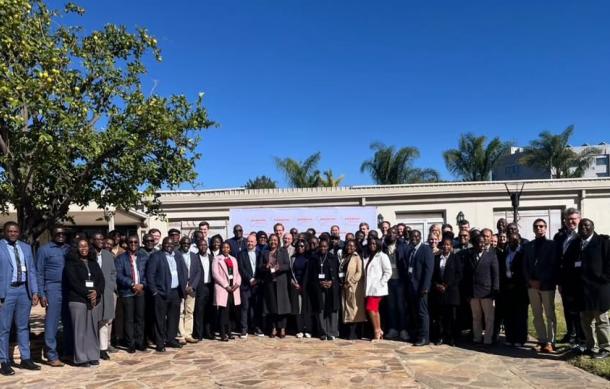
Green industrialisation at the Dry-Hy research workshop highlighted that industry has the potential to create more than 37,000 jobs within the next four years as Namibia and Germany deepen cooperation on green hydrogen technologies.
The projections were shared at a one-day workshop in Windhoek.
The focus was on advancing green hydrogen solutions and preparing future pilot projects for Namibia.
A skills analysis estimates 34,660 temporary jobs by 2030. It also projects 2,336 permanent jobs.
These are 29,700 jobs in the construction industry, about 4,300 engineers and technicians, and thousands more in logistics, environment, safety, and transport.
But skills supply remains limited. Only two private technical and vocational education and training (TVET) institutions train green hydrogen technicians.
Senior Energy Engineer for the Namibia Green Hydrogen Programme Nicholas Limbo stressed that universities and TVETs are not producing enough graduates.
He warned the gap could slow down upcoming projects.
“We observed that occupations aligned to green industrialisation produce roughly about 40 graduates in a three-year cycle compared to the anticipated demand; we then said we have a problem. If maybe three or four of the projects move into construction in the next year or so, then there will be this sort of skills gap in the industry.”
The Dry-Hy initiative is coordinated in Namibia by the Southern African Science Service Centre for Climate Change and Adaptive Land Management (SASSCAL). It forms part of a joint Namibia-Germany agreement backed by a N$755 million investment.
Dr Peter Letmathe of RWTH Aachen University leads the economic and management research.
He assesses costs, value chains, efficiency, and risks of green hydrogen technologies for arid regions in Africa.
"I can also say that we aim to develop business models that are socially beneficial. That is why the next stage should be to establish a pilot site here in Namibia, allowing us to move to the next phase before bringing the innovation to the market and society."
SASSCAL Executive Director Nelago Indongo said the project is designed for Namibia's arid conditions.
"The DRY-HY project represents a timely opportunity to advance innovation and sustainable development while contributing to one of Namibia's key national priorities: creating opportunities for young people through skills development, knowledge exchange, and collaboration."
The project also focuses on developing viable business models, promoting water-positive solutions and supporting long-term economic growth as Namibia positions itself as a global green hydrogen hub.