


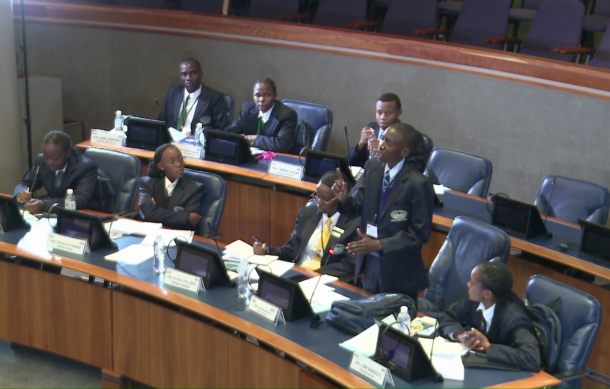
MPs from the Junior National Council (JNC) have attributed school dropouts to teenage pregnancies, substance abuse, cultural norms, and economic household challenges.
They contributed to the Motion to eliminate gender disparities and guarantee equal opportunities, retention and academic success for both girls and boys.
The Junior MPs called on the government to identify different challenges faced by each gender and implement inclusive programmes that will ensure that learners stay in school.
Diabanza David, representing the Oshikoto Region, gave his input.
“An alternative that is able to lead to effective and rather equal success in education for both girl children and boy children, given their individual problems and how we can cater for it.”
Other Junior MPs also shared their views.
“And it's also concerning that we have gender inequalities in schools while we have the Education Act of 2001 that says no child must be denied education because of the agenda," said Kapi Tjimamutja from Otjozondjupa.
“Gender equality in education does not mean pretending that boys and girls experience the same circumstances. Rather, it means recognising the different barriers they may face and ensuring that neither gender is disadvantaged because of those barriers,” explained Stephanie van Wyk from Hardap.
“A girl should not have to abandon her education because of pregnancy. A boy should not have to abandon his education because society tells him that asking for help makes him weak,” said Innocentia Shaudere from Kavango East.
“We must listen to learners, understand the barriers, support them, take responsibility and work together,” stressed Princes #Nauses from Erongo.
“I did not just identify the problems but also identify solutions. It's just the school curriculum to embrace life skills as a promotional subject,” said Naledii Demuinda from Omaheke.
“We have a free education policy, but we have not done enough to address safety and cultural norms to close this gap,” said Henriette Morris from //Kharas.
Some of the opinions are that youth development programmes often neglect the boy child.
“I am actually saying that they should also have programmes that cater for the boy child in the same way they do for the girl child,” said Chief Whip Wilhelm Abiator.
“Most of the organisations we talk about, such as girls’ clubs, Fahwehna and other child-focused organisations, mostly prioritise the girl child, while boys are left behind,” noted Ndapanda Kapofi from Ohangwena.
“Boys are increasingly being left behind in our education system,” added Kake Staypie from Zambezi.
The Junior MPs adopted the motion.