

Namibia has enough fisheries data, but research presented at the first National Fisheries Indaba has revealed that the country is struggling to connect it into one trusted and transparent system for better decision-making.
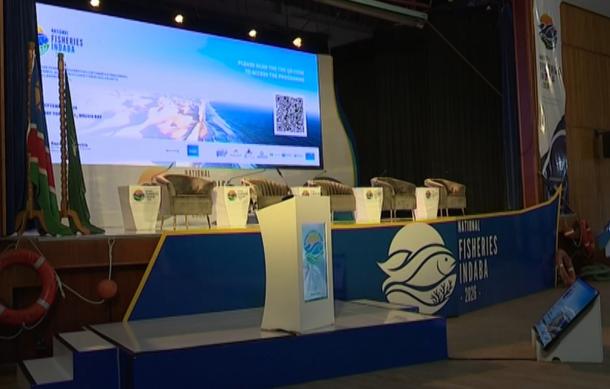
The first-ever three-day National Fisheries Indaba is underway in Walvis Bay, with the aim of diagnosing the fisheries sector and coming up with reforms.
The lead technical consultant revealed that Namibia has many of the foundations needed to manage its fisheries sector.
These include laws, policies, scientific expertise, monitoring systems, infrastructure and extensive data.
But the biggest problem identified is weakness in how these systems connect.
The evidence reveals that these datasets often operate separately, making it difficult for the government to see the fisheries sector from end to end.
The research identifies five system gaps: implementation, fragmentation, accountability, capacity and national value.
Dr. Martha Uumati is the Lead Technical Consultant at the National Fisheries Indaba.
"The reform challenge is now to make the whole system work as one, which requires five things: trusted data, trusted data so that we are working from an authoritative evidence base, so it's no longer that I like you, I'm going to give you a quota, it's gone, oh no, you are connected to who, you can come in, it doesn't work like that anymore, and that is really what we've been getting from the stakeholder in terms of transparency. You know what was interesting? It's that the youth, the youth, were demanding that we also want our part, so we always ask the question, how does it benefit? Because when Her Excellency says that we are too few to be poor, so how does it benefit a child that's been taught under a tree when you're driving your Range Rover? And those were the difficult conversations we had to have."
The proposed solution is not to replace the existing system but to connect its different parts, Dr. Uumati emphasised.
"Ultimately the question is not only how much fish Namibia has; the deeper question is how well are we governing that fish? How well are we governing that fish from the resource in the water to the benefits of the Namibian people? This is what the evidence is asking us to confirm, and that is the work of this Indaba."
The findings will now feed into national policy dialogue, with the next step being to prioritise reforms.