


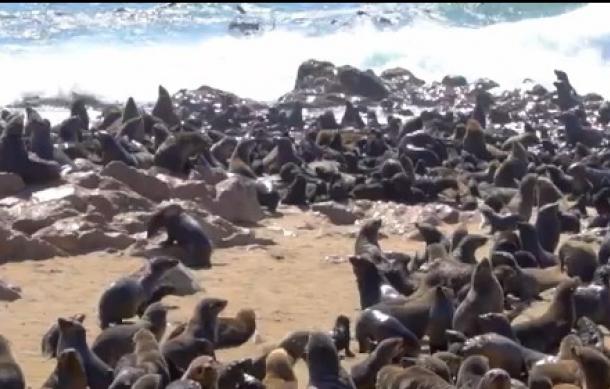
Scientists are warning of an unusual outbreak of rabies among seals in the Benguela Current ecosystem, while a virus has also been found in sardines off the South African coast.
Namibia, Angola and South Africa share the Benguela Current ecosystem.
The seals along Namibia's coastline are facing a new threat: rabies.
Scientists at the 11th SANUMARC Annual Research Conference in Henties Bay revealed that South Africa was the first country to detect the disease.
However, scientists have now observed the disease among seals along the Namibian coast.
Scientists are still investigating how the disease reached marine mammals and what it could mean for seal colonies, wildlife, tourism and coastal communities in Namibia.
Deputy Director at MEFT, Kenneth Uiseb, said, "So these are the sort of changes we are seeing. One needs to continuously monitor these changes to understand their implications. What does that mean for the ecosystems and economies that rely on these ecosystems? So, it's just not the long-term monitoring; it's about monitoring and making sense out of these long-term data and converting these long-term data sets into policy recommendations so that we can also be in a position to adapt and adjust to these changes that we are seeing.
Officials warn that people should not touch or approach sick or dead seals.
Rabies can spread through contact with infected animals and can be fatal if treatment is not received in time.
There are also concerns that the disease could move through the food chain to scavengers such as brown hyenas and black-backed jackals.
At the same time, scientists have reported a virus in sardines off the South African coast, another development they say requires urgent investigation.
BCC Manager at the Ecosystem Advisory Services, Paulus Kainge, added, "Just last month we heard about some viruses in sardines. These are the things that we have never heard of before…sardines off the South African coast, and of course, together with the seals and other resources, are some of the shared stocks that we have in the region among all three countries, so it's one ecosystem, and it's very strange signs that are coming. Whether this is a sign of an ecosystem transition, we must continue to monitor and observe it."
Authorities are urging the public to keep a safe distance from seals and to report any unusual animal behaviour or deaths to the relevant wildlife and veterinary officials.