


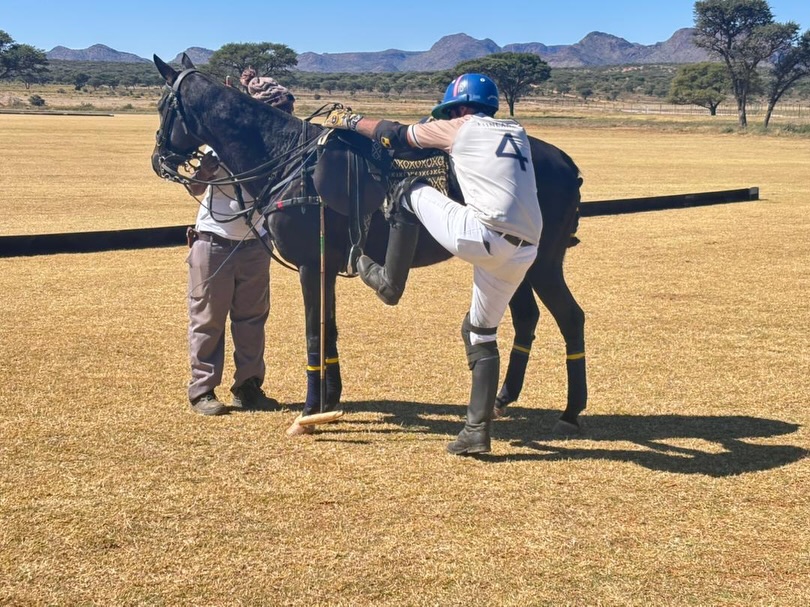
Namibia has entered the world of polo, marking the sport's first appearance in the country with an exhibition match held at the La Muela Polo Club near Windhoek in April 2026.
Polo is played over four chukkas of 7.5 minutes each, with two teams of four players competing to score goals with long-handled mallets while riding at speed.
The launch on April 18, 2026, saw Team La Muela defeat Team Maranatha 8-6 in Namibia's first exhibition match.
The game took place at La Muela Polo Estate, south of Windhoek in the Aus Mountains, where a regulation-size grass field was developed to support local polo.
To establish the sport in Namibia, 40 horses were imported from Argentina.
These horses will be used for competition and breeding with local mares as part of a development strategy.
Founder Till Jeske and his wife said the vision is in its early stages, with local players beginning training and a goal of building a sustainable polo community in Namibia.
“So we hope that our polo club it's a club life, members who come and have developed a passion for it. Namibia has a lot of horse people, Namibians love horses, and I hope that people get attracted to the club, that we get sponsorship, so that also people can start to play, and that have subsidized sponsorship. We talked about that earlier. And we also hope that other clubs emerge and get developed,” Jeske said.
Former South African Olympic swimming champion Ryk Neethling shared his transition from swimming to polo, describing it as a demanding sport that requires discipline, precision, and teamwork.
He welcomed Namibia's entry into the sport, saying it marks an important step for polo's growth across Africa.
“I mean, you know, polo is quite a niche, you know, sport, so it's quite a small community, and I think that's why us from South Africa must come and support it, and hopefully we'll, you know, we'll get them down there as well. So we've been to Kenya. There's quite a big community also, you know, in Zimbabwe, and I think we must all work together. I think if we can reach out and if we can show the world that there's polo here in Africa, that we can get the international visitors and, you know, we'll get more investment, and I think that's good for everybody” Neethling said.
The Chief Administrator of the Namibia Sports Commission Freddy Mwiya welcomed the introduction of polo, saying it has potential to boost sports tourism and diversify Namibia's sporting landscape.
The Commission also confirmed that discussions are underway around formal recognition of the sport, highlighting its contribution to tourism and economic activity.
“It is a very big sport court in Zambia, and it brings a lot of tourist attractions, especially when they've got international events. And imagine Namibia now hosting a league. I think you've seen the facility, how it looked, that facility. I know in Namibia one day, and we start, you know, each one that the sport court is prepared in our country, and we host an international game,” he said,
Matheus Hamutenya, one of Namibia's first polo patrons, currently training in the sport, described his journey as challenging as he learns the demands of the game.
He said there is hope that polo will gradually move beyond its elite perception and become more accessible locally.
“Yes it's like another sport. And the problem we have with the delivery is about the fees to become a member, and I appeal to the owner to look at it to accommodate us. We have horse riding. It's almost like horse riding. And to assist them maybe in terms of low fees or maybe because it's a sport, it's like soccer. You cannot buy a type. We have so many type Namibia who can ride horses. I know” Hamutenya said.
Polo coach, player, and horse trainer Mariano Mitazzelli emphasized the importance of proper structure in establishing the sport in Namibia.
He said building strong training systems, horse development programs, and a local club foundation will be key to long-term sustainability.
“We are building a club, we are building polo in this country. I am the polo manager of the club, instructor, and horse trainer. I have my team, my guys from Argentina. We teach the Namibian people, the Namibian grooms, to take care of the horses from zero. We have two beginners, three beginners, sorry, students from Namibia, two patrons, the owners of the club, and people come frequently from other countries to join us to play” Mitazzelli said.
For now, La Muela is the starting point of polo in Namibia, joining a growing African polo landscape that includes South Africa, Zimbabwe, Kenya, Botswana, and Nigeria, where the sport is already established.
What began as a debut exhibition match now represents more than sport, it marks the beginning of a new equestrian culture and a developing sporting identity in Namibia.