


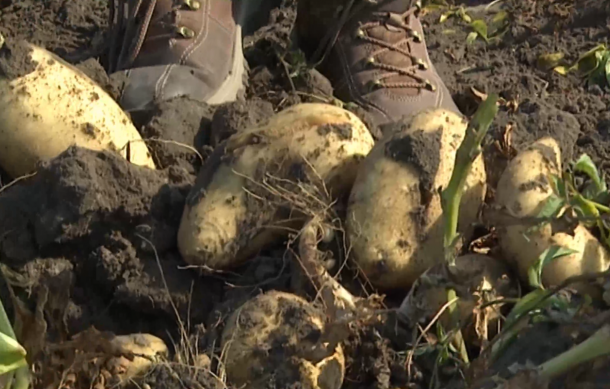
What do you call a person whose responsibility is to produce nourishment that is able to sustain life? A farmer
Others refer to them as our everyday heroes.
They make sure we have food, despite extreme weather conditions. Their work is physically demanding and financially taxing.
Augustinus Poroto is the chairperson of the Likorerere Cooperative Seed Growers.
"Without a farmer, there is no life. Without a farmer, there is no food."
The seed growers produce varieties of Mahangu and sorghum, beans and nuts. They supply all the Kavango regions, as well as some parts of Zambezi and northern Namibia.
They have been producing certified seeds for the past 30 years.
"We can't stop. If we stop, then we kill all the Kavangos."
Requirements for producing seeds are very specific. It's not for everyone.
"Your land must be 200 metres from the other land, the one that is not producing seed. And your land must be clean. No sticks, no stumps, no everything. It must be clear. We have inspectors, seed inspectors from the Ministry of Agriculture, who visit you before you prepare the land to plough. Visit you during the planting. They visit you during the weeding. And visit you during the harvesting."
During harvesting, experts take samples for testing at the Omahenene research station.
"They say your germination percentage must be 80%. Under the 80%, they will disqualify it."
Seeds with a below 80% germination rate are considered grains. If they don't meet grain standards, they become chicken feed.
"You must work very hard so that you can qualify for 80%, and they give you a certificate."
Some of these seeds are slowly making their way to southern and central Namibia.
"We feel proud. When you go and stand in your field to start producing, you are not saying, I'm producing seed so that I can get money. No. You say, I'm a seed grower for the Namibian, to feed the Namibian."
The cooperative makes use of locals, mostly women in the village, to do the work. Apart from getting paid, they also have access to prime seeds.
Each member produces between seven and ten tonnes of certified seeds per year.
Poroto says a number of heroes and heroines have sacrificed their lives for the independence of the country. The focus now should be on the heroes striving for economic independence.
"How will we develop economically, starting from the grassroots – our village, our country, our people?"