


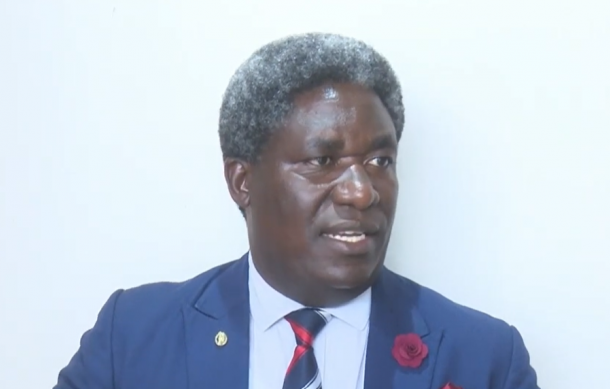
Though the Commission for Alternative Dispute Resolution Draft Bill was received with support from stakeholders in the Zambezi Region, those voices have cautioned that they hope for effective change.
During deliberation on the Commission of Alternative Dispute Resolution Draft Bill, stakeholders cautioned about the need to safeguard the impartiality of both conciliators and arbitrators, ensuring they are not influenced by politicians or employers.
Others asked for the office to be decentralised for the sake of their members who live on towns' outskirts.
They added that the system of having one official as conciliator and arbitrator at the same time contributes significantly to the length of time it takes to resolve disputes.
"When you are registering a case, you can find that one person is doing a reconciliation and then tells you that after reconciliation, we are going for arbitration, and again you may find that the same person who is seated on the reconciliation is the same person who will sit as the arbitrator, so that's why I want to know what the commission must do on that one," says Regional Coordinator for NATAU, Alex Taimo.
Reagan Mikiti, Branch Organiser for NAFAU, adds, "I seek clarity on how conciliators and arbitrators will be appointed and what safeguards will protect them from politics and employer influence."
"We support the establishment of the commission, especially because it will be independent, and we hope that it will not only be structurally independent but also functionally and in terms of funding, because we have seen commissions like the Ombudsman that are independent but then are underfunded, so we hope that this commission, if it is established, will be properly funded," contributed Edwin Samati, the Regional Chairperson for the Teachers Union.
Members of the technical working group Mushoke Sibeya and Veronika Halwoodi said the commission of labour seeks autonomy, and there will be a separation between conciliator and arbitrator roles.
"In that regard, we seem to separate the two roles and make it clear that the official that deals with the conciliation is not the same official who will then deal with the arbitration."
"Once you have your autonomous, independent institution well-resourced, then the aim is to make sure that every regional office is well capacitated so that the labour disputes will be handled expeditiously."
The Deputy Chairperson of the Technical Working Group is Paavo Amunjela.
"These functions are now better suited outside the sphere of ministry because of perceptions that are around independence or autonomy influence. When you have a dispute, you want that dispute to go to somebody neutral who will listen to both sides and potentially take a decision that does not favour one or the other."