


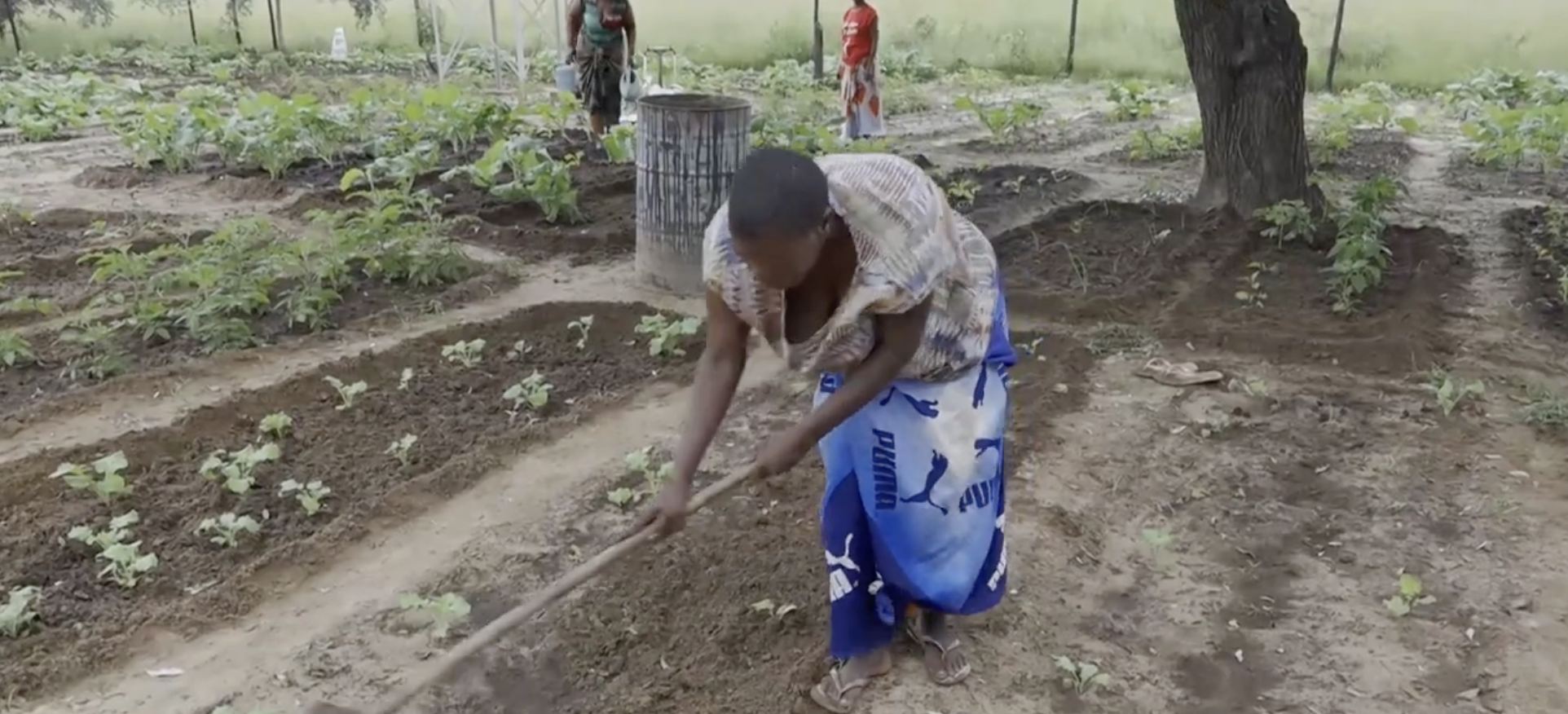
Communities living alongside Bwabwata National Park in the Zambezi Region are rethinking how to use the land and produce food, as changing weather patterns put more pressure on livelihoods and the need for reliable food security grows.
Through a project funded by the Namibia Nature Foundation (NNF), residents, mostly San-speaking people from Omega 3 and Chetto along the Bwabwata National Park, have taken up vegetable gardening, replanting indigenous tree species, and poultry farming.
The interventions form part of broader efforts to strengthen climate resilience and promote sustainable natural resource management in the region under the Climate Adaptation for Protected Areas initiative.
NNF Field Coordinator Robert Mukuya, highlighted that noticeable progress has been made in terms of community commitment.
The project is in its second production cycle, following a challenging start in some villages.
"Agriculture production is new to the Kwe people, so we are preparing them to get used to this because this is their food security. And you know, living in the park, this is also to avoid people from poaching and doing any other illegal activities."
Currently, 12 active gardening projects are being run by different households within the park, mainly for household consumption.
There are considerations in expanding production for commercial purposes should future demand arise.
Farmers receive seeds and training in climate-smart agricultural practices.
They are encouraged to align their production with seasonal conditions.
Ritha Kambathi, one of the beneficiaries, explained that although pest infestations have posed challenges, the project continues to provide meaningful benefits.
"Nevertheless, I will not say that I have not harvested. There are quite some benefits here; regards to relish, we can easily get it here and sell the surplus and get N$10."
The NNF is providing water for both irrigation and household use.
Farmers also use natural manure from cattle and poultry to fertilize their gardens.
Another beneficiary, Bettina Fredy, is among 24 participants in the chicken project.
"I received 23 chickens and managed to increase them to 79 last year. But due to predators, the number declined to 52. At the moment, I need a bigger fence to keep track when they are released from their coup."
Another ongoing initiative is forest restoration through the replanting of indigenous trees.
Seeds are collected within the park, nurtured in a nursery, and later replanted in identified restoration sites.
A NNF Representative, Diana Shakumu explained.
"The aim is to reduce biodiversity loss and also to promote climate resilience in climate adaptation in our country. So for now, we have specific areas that we are restoring."
The overall goal is to maintain and restore the forest, Shakumu added, using the same indigenous species already found in the area.