


An allocation of over N$1.5 billion has been made from sources outside the State Revenue Fund for the construction of houses under the National Housing Enterprise (NHE).
The aim of this additional funding is to accelerate the delivery of affordable housing and address the housing backlog.
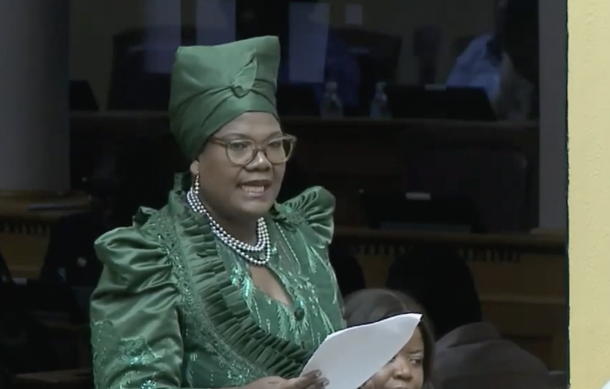
The Deputy Minister of Urban and Rural Development, Evelyn !Nawases-Taeyele announced the budget for the ministry, with an allocation of over N$1.9 billion.
"This allocation provides for both operational and development budgets as follows. N$1.2 billion for the operational expenditure and N$744 million for the development expenditure. This year's allocation represents a 16.39% reduction in the operational budget and a 39.66% reduction in the development budget, compared to the previous financial year. Yet formalising informal settlements through infrastructure, water, and sanitation remains a priority. Despite the budget reduction, the ministry remains committed to executing its mandate of managing regional and local governance structures in terms of Articles 102-111 of the Namibian Constitution."
!Nawases-Taeyele said one of the main activities for the ministry for the financial year will be the declaration of townships in informal settlements and the servicing of plots.
"The challenges faced by the Mass Housing Development project include ongoing legal battles in court that have persisted since 2017. However, the situation is currently stabilised. This programme will focus on the following: a continuation of the formalisation of informal settlements in five priority towns, namely Windhoek, Walvis Bay, Rundu, Keetmanshoop, and Oshakati, as well as other identified towns: Mariental, Swakopmund, Katima-Mulilo, Usakos, Tsumeb, and Otjiwarongo. Prioritising the decongestion of informal settlements and the servicing of land through brownfield developments. Support the community-based organisations, including the Shackdwellers Federation of Namibia, to deliver affordable housing and promote the use of alternative and sustainable building materials to reduce construction input costs."
Under the programme of rural development, N$123.5 million is allocated.
"The programme is to coordinate the implementation of rural development initiatives aimed at contributing to food protection and security, employment, improved sanitation and the welfare of rural communities. The activities include the implementation, monitoring and evaluation of rural development initiatives; managing rural development centres; and conducting research on adaptive approaches and contemporary issues affecting rural areas. This funding will support self-health and income-generating projects, including microfinance programmes such as 'one region, one initiative' and the Rural Employment Scheme."