


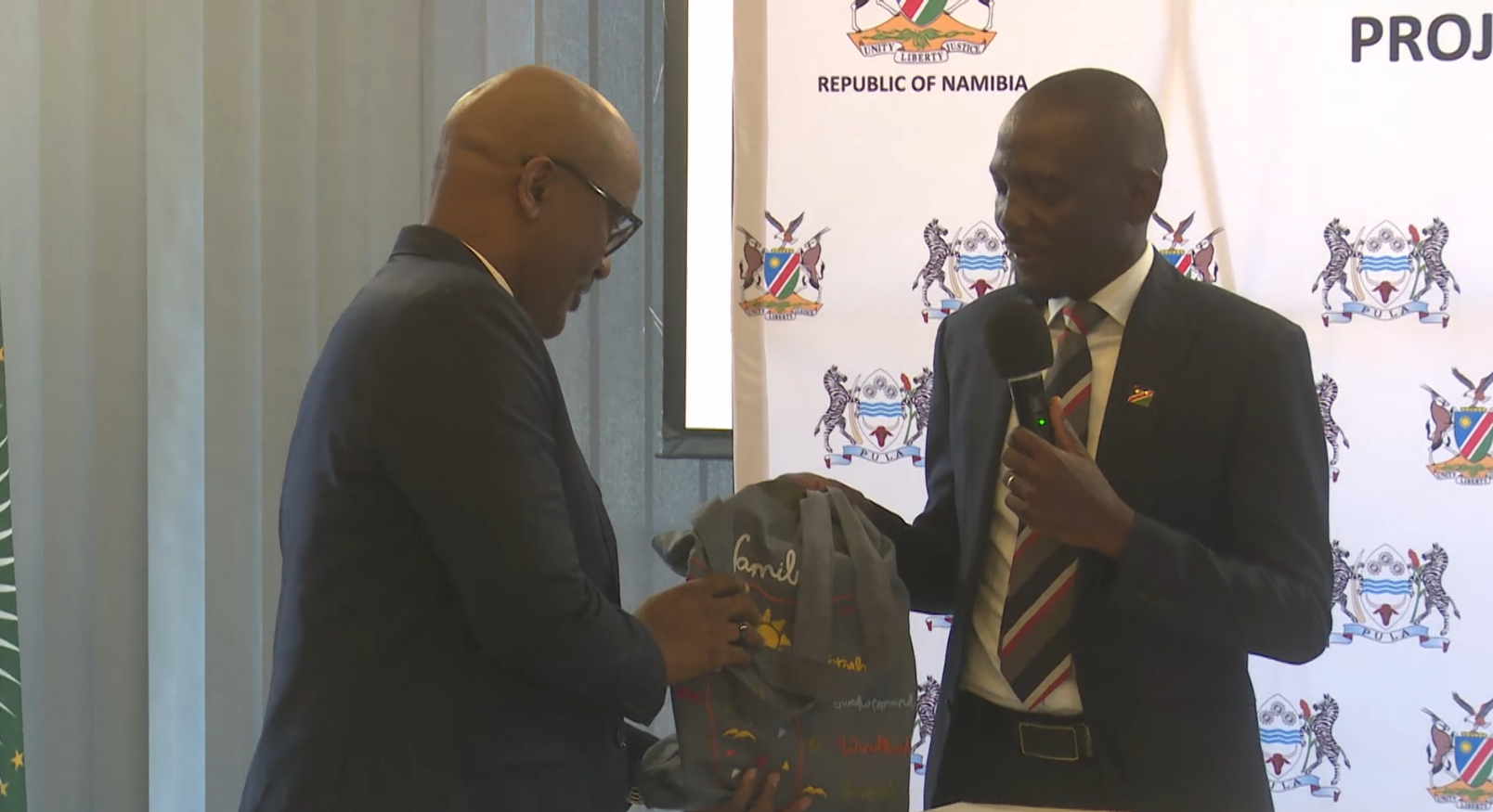
Namibia and Botswana are pushing ahead with plans for a major railway project, with the completion of the feasibility study expected in June.
The proposed Trans-Kalahari Railway will create a new export route to global markets by linking Botswana's mineral-rich regions to Namibia's port at Walvis Bay.
At the joint ministerial committee meeting in Swakopmund, leaders pointed out the importance of the findings from the feasibility study, which will guide the construction of the railway.
"Years passed. There were delays, questions, and at times, doubts. But I want to say clearly, the political will will never waver. Since 2022, we have continued monitoring progress and holding each other accountable until a landmark was reached in April 2025, with a formal commissioning of a comprehensive feasibility study, said Namibia's Minister of Works and Transport, Veikko Nekundi. "The findings, expected later this year, must provide the definite roadmap for the construction of this very important project. The project's engineers are now running, and they must not idle near a stop."
The project is expected to reduce pressure on regional road networks and reliance on a single congested export corridor through South Africa.
"We are not building this railway merely for statistical purposes or to demonstrate our ability to rebuild railways; it must genuinely add value to our nations. We are building it for farmers in Omaheke, who need a course of effective routes to markets. For the young engineers in Gaborone, who will design the next generations of transport infrastructure."
The two countries are jointly funding the project.
Botswana's Minister of Transport and Infrastructure Noah Salake, Botswana's Minister of Transport and Infrastructure, said, "There is also something that humbles me greatly: we are contributing 50% in partnership with the government of Namibia. It is very clear that the largest part of the railway is in Botswana. This is something that will go a long way in cementing and deepening the relationship between Botswana and Namibia. With the project now at its twilight or final flaming stages, I wish to take this opportunity to commend you, our technical teams, from the two countries and consultants, in a very special way, for having dared to be on a high-priority push."
Once completed, the railway is expected to boost trade, create jobs, and open up new economic opportunities along the corridor stretching across the Kalahari.