


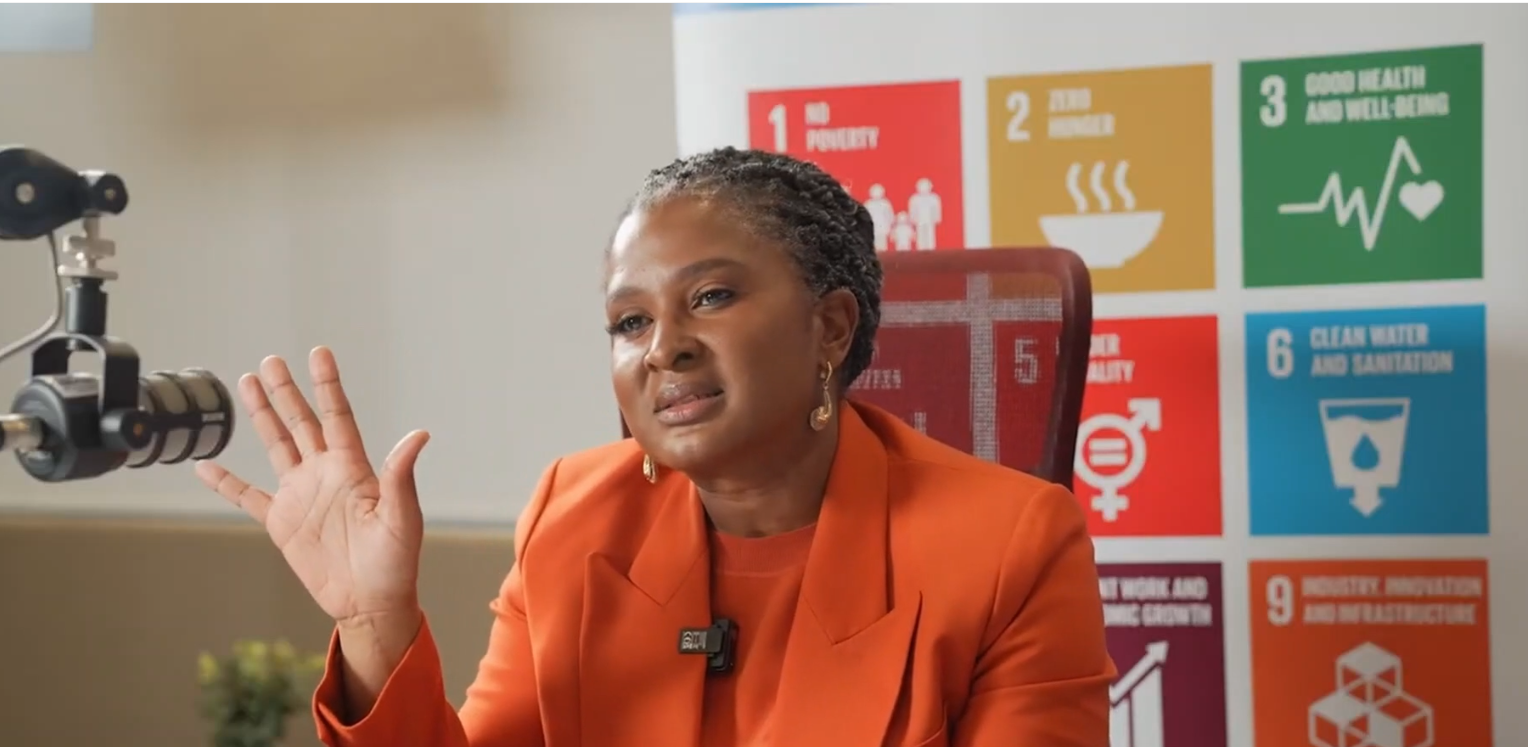
Former First Lady Monica Geingos has urged that the Sustainable Development Goals be regarded as a practical action plan instead of merely a policy framework.
Geingos said there is a need for focus on implementation across inequality, gender equality, and youth development.
The Sustainable Development Goals function as a global action framework aimed at addressing inequality and improving living conditions across countries.
Therefore, Geingos regards her advocacy role as focusing on translating the goals into practical programmes.
Geingos highlighted the Be Free Youth Campus as an example of youth engagement shaped through consultations with young people across different regions.
She said the initiative aligns with all 17 Sustainable Development Goals through its structure and programming.
"But if I have to personally drill down into SDGs that I believe to be important, it would probably start with SDG 5, which goes into gender equality for obvious reasons. You can't build a society that's not equal. And as a fundamental principle, the empowerment of women and girls is a powerful catalyst for achieving all of the other SDGs. Now, when a review was done on the SDGs last year, this was the one SDG that not only wasn't making progress, but in some areas it was actually falling behind. So if we fall behind with SDG 5 on gender equality, we're going to fall behind on all of the SDGs. So that one to me is quite important."
On gender equality, she said progress remains uneven and links it to wider development outcomes.
She also pointed to youth unemployment and inequality between countries as key areas of focus in her work.
"Especially in countries like ours, where you have by far the biggest confusions and where unemployment is very high, youth unemployment will be a little bit higher. So that SDG is quite important, and also just considering the risks that will be brought by technology, by very problematic global economic policies that are being made at the moment. So that SDG 2 is quite important."
Geingos said that violence and gender-based violence can also be tied to social and historical instability, saying these issues affect development outcomes across sectors.
She said development strategies that focus only on economic policy without accounting for structural inequality and historical context risk reproducing existing challenges.
Geingos also cautioned that ignoring these dynamics can contribute to populist approaches that do not address the underlying causes of social problems.