


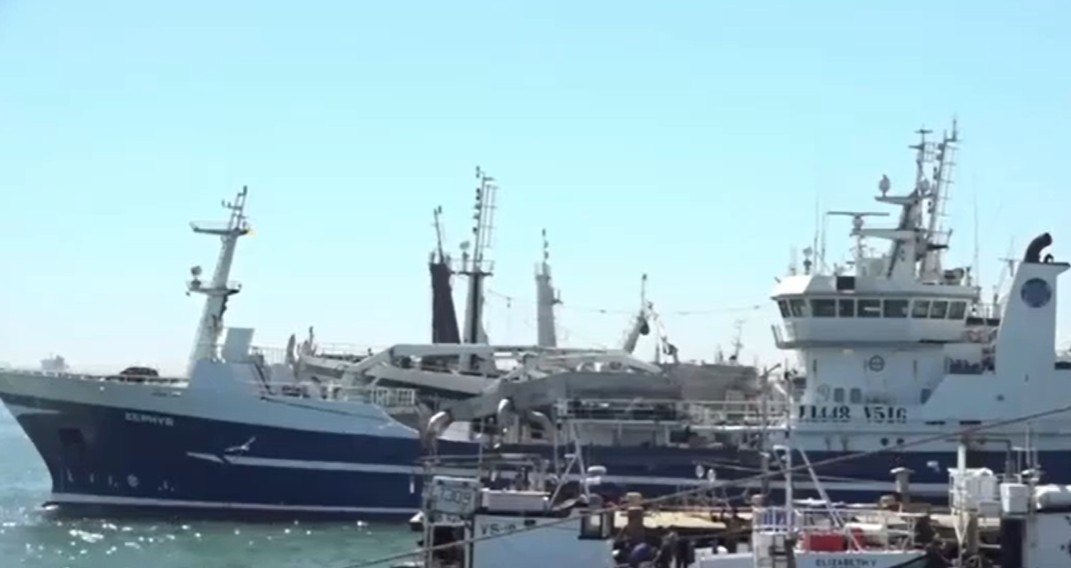
The Wet Landed Small Pelagic Association has defended a Cabinet decision to relax restrictions in parts of the 200-metre fishing zone, saying the move protects jobs and grows onshore fish processing.
In late 1990, the government banned trawling and longline fishing in the 200-meter zone to protect its breeding grounds.
In 2023, a three-year government-sanctioned scientific experiment found that juvenile fish caught during the experiment were less than one per cent, indicating minimal impact on breeding grounds.
Chairperson of the Wet Landed Small Pelagic Association, Johnny Doeseb, explained that "it means we have landed over 15,000 tonnes over a period of three years. And out of that, only 1% were small-sized. Now, out of that, minus 6% were bycatches."
He added that "this means that the method demonstrated that there are responsible fishing practices that we are adhering to. We are aligned with the conservation objectives from the Ministry of Fisheries because there are clear terms of reference that say how this experiment must be conducted."
It is these findings that the government used to decide to allow wet-landed horse mackerel fishing vessels to operate in the 200-metre isobath from 1 May until 30 April 2027.
Three companies, Princess, Etosha and Gendev, make up the Wet Landed Small Pelagic Association, which is backing the government's decision.
The companies have invested millions of dollars in new fishing vessels, and the experiment revealed protect sensitive marine areas during fishing operations.
Speaking at a media conference in Walvis Bay, Doeseb stressed that the three companies, which operate land-based factories, have created 1,700 jobs, mostly for women and youth, compared to 10 vessels that process fish at sea.
The association is also proposing seasonal fishing bans to help fish stocks recover, while calling for more quotas to be allocated to land-based operators.