


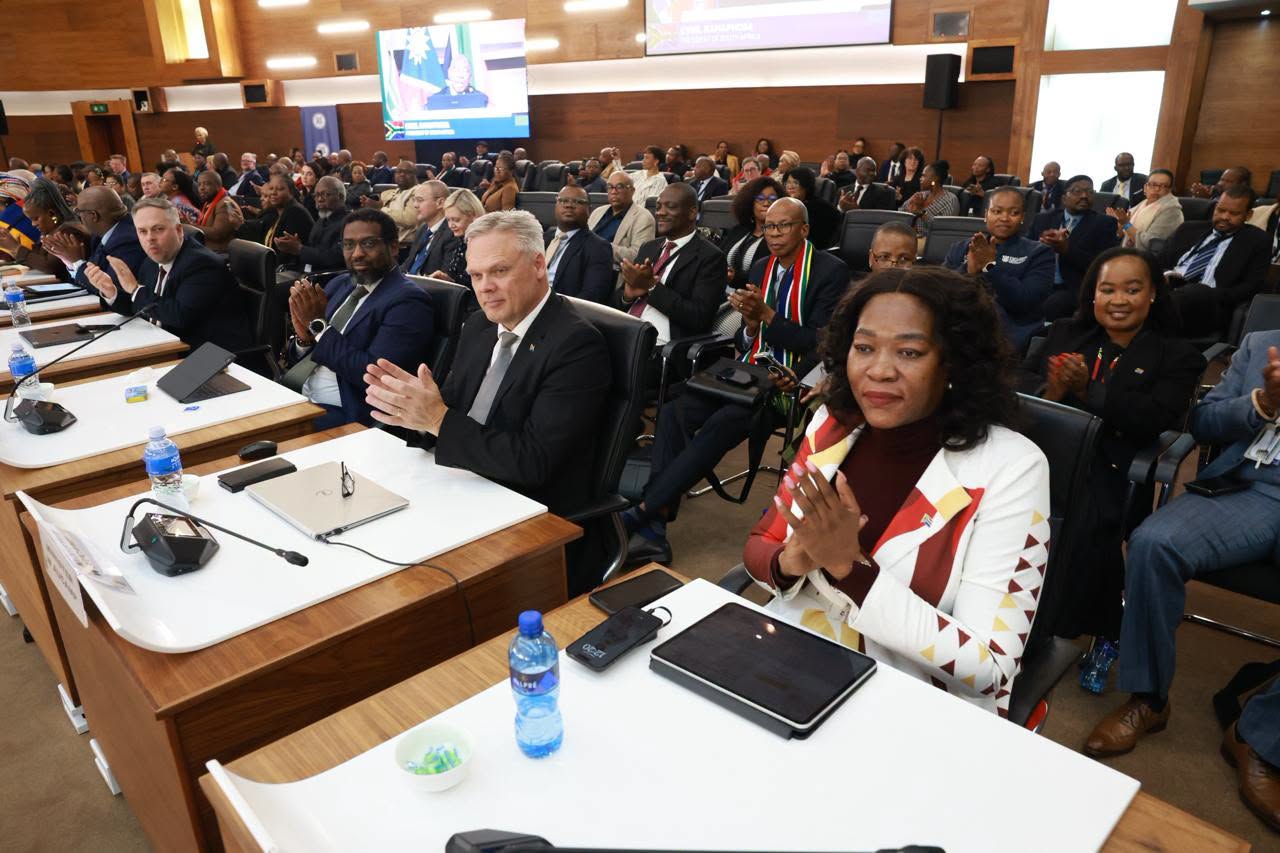
Business leaders from South Africa and Namibia used the Namibia-South Africa Business Forum to urge their governments to back a new joint business council with concrete measures on industrialisation, green energy and faster, cheaper cross‑border trade.
The forum was held on the sidelines of the 4th Bi-National Commission in South Africa.
Addressing the two presidents, Dr. Netumbo Nandi-Ndaitwah and Cyril Ramaphosa, the entrepreneurs stressed that the private sector now has an institutional platform to engage both governments and that it expects support on finance, policy alignment and customs harmonisation to unlock the full potential of regional cooperation.
The council provides the private sector with a formal mechanism to engage governments and advance economic cooperation between Namibia and South Africa.
Business leaders at the forum identified three priority sectors for collaboration, including green hydrogen and renewable energy, manufacturing and industrialisation, and transport and logistics corridors.
The shortage of advanced skills was identified as a major challenge, advising that both countries need to strengthen education, science, technology and innovation to prepare workers for the economy of the future.
The Chief Executive Officer of the Namibia Chamber of Commerce and Industry (NCCI), Titus Nampala, says, "So the key thing that came out here is really collaborating and sharing of knowledge and technology instead of seeing each other as our competitors but really as partners and creating a way where we can have a win-win situation. The other key outcome of this discussion was the lack of advanced skills that we need to grow our economies.
Business leaders also urged the two governments to introduce specialised financial instruments, including trade finance facilities, guarantees and blended finance, to reduce the risks associated with cross-border investment and trade.
President of the South African Chamber of Commerce and Industry (SACCI), Mtho Xulu, reiterates, "We went on further to highlight the need for us to continue to leverage our strategic logistics by utilising corridors such as Lobito Corridor to improve regional connectivity and to allow even our sister countries such as the DRC to unlock minerals through the logistics that Namibia and South Africa are able to provide to the region."
For many delegates, the business forum offered an opportunity for Namibia and South Africa to strengthen private sector collaboration, unlock new investment opportunities and advance regional trade.
According to the Chief Executive Officer of the PP Africa Group of Companies, Dr. Sindiswa Mzamo adds, "My highlight is the signing of the MOU between the private sectors of Namibia and South Africa. It means that our principals, the two presidents, care about the private sector because the MOU on its own will elevate us to engage in Namibia in order to open up in terms of trade and deal with issues like non-tariff barriers."
"We have made contacts that will lead to partnerships, joint ventures or contracts signed, so we have come with an empty basket and come back with a full basket in different sectors, including agroprocessing, mining and MSMEs," states the Vice President of Namibia Local Business Association (NALOBA), Kanu Amadhila.
They further called for greater policy alignment, industrial development strategies, import substitution initiatives and regulatory reforms aimed at reducing the cost of doing business while strengthening regional integration through SACU and the African Continental Free Trade Area (AfCFTA).