


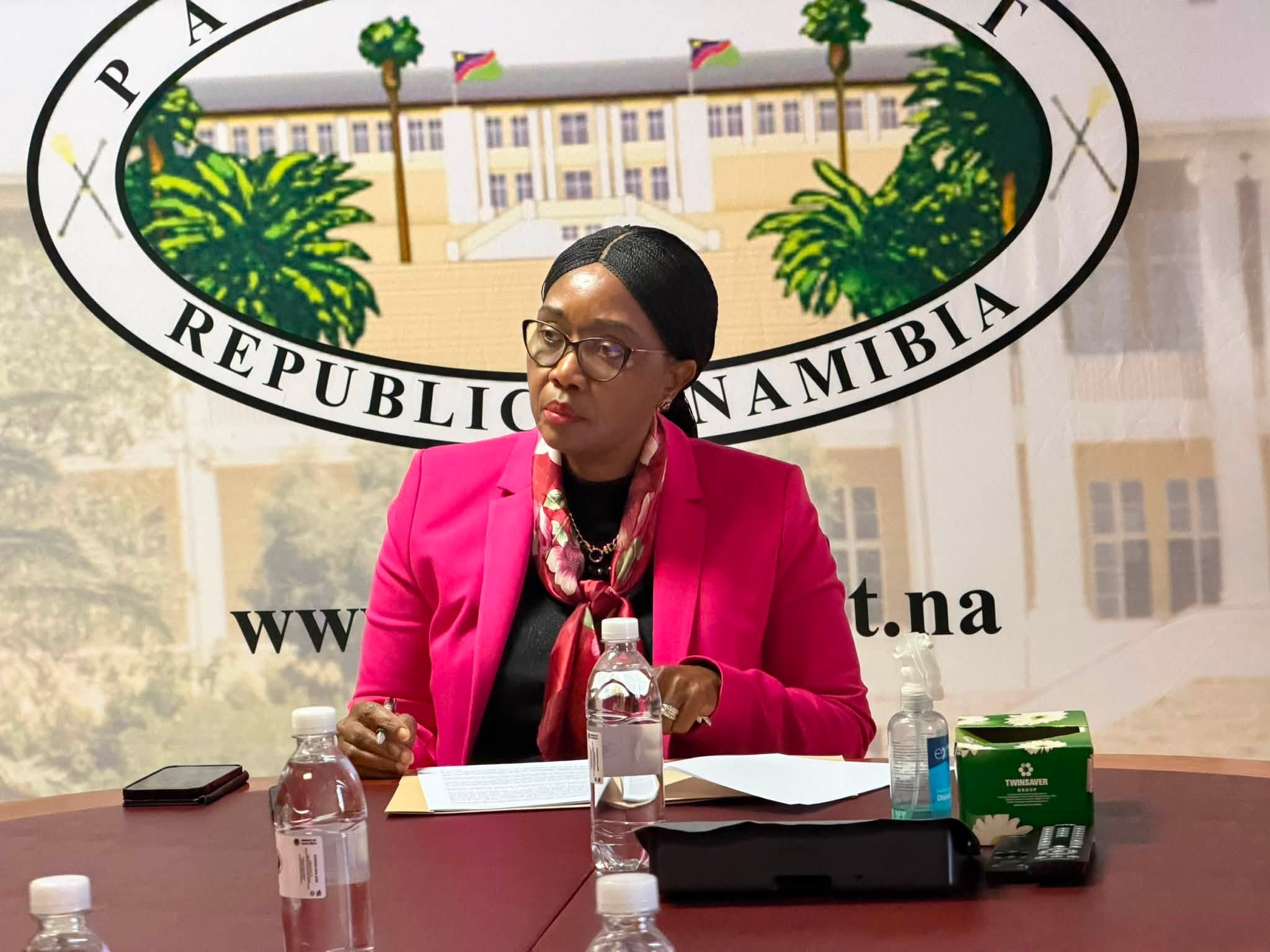
Parliament is strengthening its role in holding the government accountable, as parliamentary leaders renewed calls for lawmakers to put the interests of citizens ahead of politics.
Members of Parliament, committee chairpersons, and international partners have gathered in Swakopmund to strengthen the leadership of Parliament and improve democratic governance.
Speaking at the opening, the Speaker of the National Assembly, Saara Kuugongelwa-Amadhila reminded her peers that their primary responsibility is serving the people.
"Our Constitution is not a platform for us to finish what we could not accomplish during the election campaign. It is about serving the people of Namibia, and we will be judged on that basis. Democracy is not just about holding regular elections; it is also about improving the welfare of the people we lead."
Kuugongelwa-Amadhila said Namibia's Constitution deliberately separates the powers of the Executive, Legislature, and Judiciary to ensure accountability and protect democracy.
"So, if you can take the government, the President, the Prime Minister, or the Speaker to court and win your case, that says something about the country's system of governance. It is not about whether you are right or wrong, because tomorrow you could also lose a case. Rather, it showed that we do not need to retaliate, resort to violence, or descend into civil conflict. When you are offended or aggrieved by the actions of someone, no matter how senior or powerful that person may be, you can go to court with confidence that the judiciary will deliver justice."
The Chairperson of the National Council, Lukas Muha, stressed that Parliament's relevance is increasingly challenged when policy decisions are made by bureaucracies and independent agencies rather than elected representatives.
“It is challenged when Members of Parliament choose their popularities and media politics, whereby political discourse increasingly occurs outside Parliamentary Chambers. This approach weakens structured debate. It is challenged when party discipline declines and public confidence erodes, whereby parliamentary legitimacy is undermined.”
Muha added that Parliament should move beyond simply questioning government officials by ensuring recommendations are implemented and monitored.
“Without a mandatory accountability, committees risk repeating recommendations without consequences or impact.”
The week-long workshop is expected to explore ways of strengthening cooperation between the two Houses of Parliament while promoting inclusive leadership, effective oversight, and participatory democracy.