


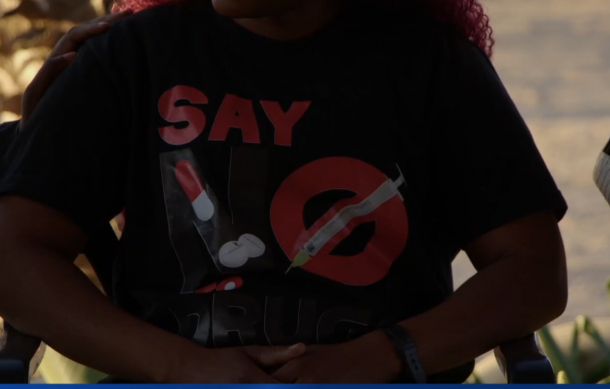
Okahandja residents are jointly amplifying their voices to address the growing problem of drug abuse and crime among young people in the town.
Residents say drug use is destroying the lives of young people while contributing to rising levels of crime and violence in the community.
For 60-year-old Okahandja resident Sylvia Doeses, the impact of drugs and crime is deeply personal.
She has two sons who are currently serving prison sentences for offences linked to drugs and crime.
Doeses says she has suffered as a result of her sons' drug use, recounting an incident in which she was assaulted by one of them after confronting him about using drugs and stealing from the home to finance his addiction.
She says the experience has strengthened her resolve to speak out against drug abuse and its devastating consequences.
For Doeses, drug use should have no place in the community, and she is calling for stronger efforts to keep young people away from drugs and prevent others from experiencing the pain her family has endured.
She believes addressing drug abuse is necessary to reducing crime and protecting the future of Okahandja's youth.
"I am saying no to drugs. Drugs have destroyed the lives of our children, and we are suffering. I am saying no to drugs. No one can tell me anything because I know what drugs can do. I had so many things in my house, but he sold everything because of drugs. I am saying no to drugs. We need to work together to end drug abuse. In these two months alone, we have buried many children because of drugs."
Residents of Okahandja have thus called for stronger action against drug abuse and crime, saying communities continue to suffer as young people fall victim to substance abuse.
The concerns were raised during an anti-drug and substance abuse campaign in Okahandja, aimed at addressing the growing problem of drugs and crime in the town.
Residents called for authorities to intensify efforts to identify and remove drug dealers from communities, while also urging the establishment of a rehabilitation centre to support people affected by substance abuse and help them rebuild their lives.
They also raised concerns over the granting of bail to repeat offenders, particularly those with extensive criminal records, saying this undermines efforts to combat crime.
Residents further expressed concern over delays in finalising criminal cases, including cases where suspects have already admitted to committing offences.
"It is also for the police to explain to us what exactly is going on. Some of the housebreak-ins people remain in custody longer and get convicted, but the murderers come out on the streets again, but we need to understand the justice systems because some of the acts are very clear. We should not allow it out," stressed the organiser of the Anti-Drug and Substance Abuse Campaign, Jurry Ramphaga.
Co-organiser of the Anti-Drug and Substance Abuse Campaign, Claudia Muonde is also calling on authorities to actively participate in important community initiatives, such as the campaign, rather than turning a blind eye to the challenges facing residents.
"Our local authorities are not turning up to support the campaign. Please support us; if we do it all alone, it will not reach the success it should reach."
They are calling on law enforcement agencies and the justice system to act more decisively, saying a coordinated approach is needed between communities and authorities to curb drug abuse, crime and its impact on young people.