FUEL PRICES INCREASE FROM 8 MAY
Breadcrumb
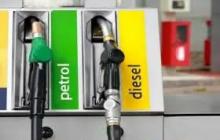
Motorists will face higher fuel prices starting at midnight on 8 May 2026.
The Deputy Minister of Industries, Mines, and Energy, Gaudentia Kröhne, has inaugurated a fully fledged computer lab at the Minna Sachs Primary School in Keetmanshoop.
The school received 20 computers and printers valued at more than N$350,000 from the Swakop Uranium Foundation.
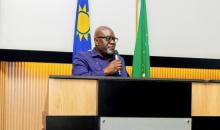
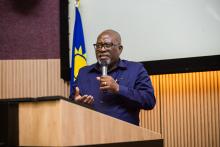
Industries, Mines and Energy Minister Modestus Amutse has reiterated his ministry's dedication to uplifting all members of society, especially those who often face marginalisation.
The National Assembly has approved the Ministry of Industries, Mines and Energy's vote of N$827 million.
The vote will now move to National Council.
Through the Namibia Industrial Development Agency (NIDA), the Ministry of Industries, Mines and Energy (MIME) is advancing major industrialisation projects, including a pipe manufacturing initiative valued at N$390 million covering construction and operational phases.
Minister of Industries, Mines and Energy, Modestus Amutse, says the green hydrogen programme falls within Vision 2030 and the Sixth National Development Plan, with a clear objective to transition Namibia from a primary commodity exporter to a diversified, industrialised economy.
The Minister of Industries, Mines and Energy, Modestus Amutse, said it is not within his mandate to extend or terminate contracts of CEOs within mining companies.
Namibia can no longer depend on exporting raw minerals alone but must focus on adding value to its natural resources to create jobs, grow the economy, and increase local participation in the mining sector.
The Ministry of Industries, Mines and Energy has maintained fuel prices for this month, a move aimed at supporting price stability amid ongoing global market volatility.
Fuel prices for domestic consumption for unleaded petrol 95 will remain unchanged at N$20.58 per litre.
A public-private electrification project is transforming the lives of 257 families in the Usab Informal Settlement at Karibib.
Residents in the Usab Informal settlement used to suffer when they had no access to electricity.