


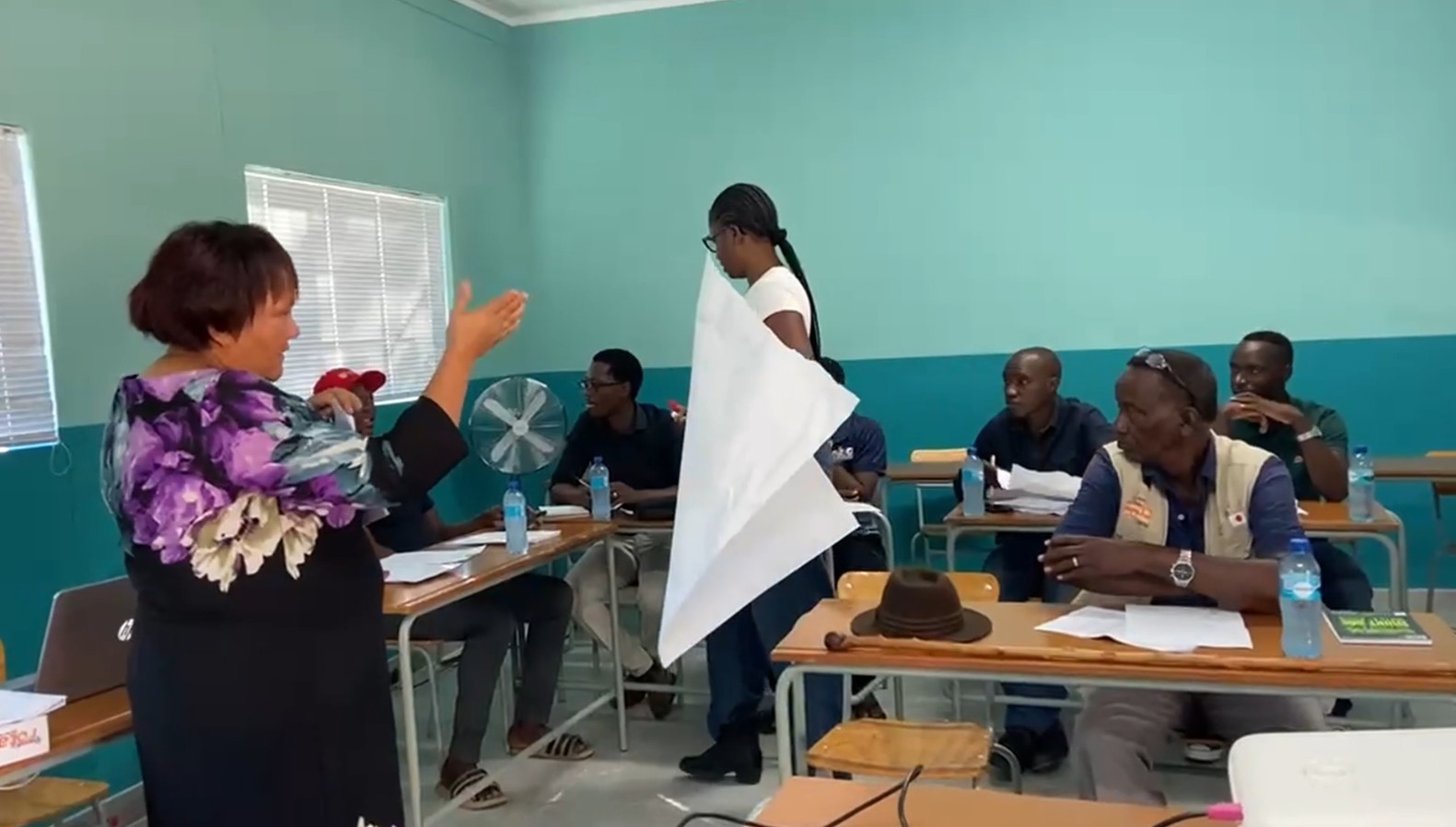
The University of Namibia (UNAM) conducted a three-day capacity-building training in Tsumkwe.
The training aims to strengthen community resilience, promote sustainable livelihoods, and enhance the integration of human, animal, and environmental health.
Participants engaged in discussions and knowledge-sharing sessions focused on documented Indigenous knowledge systems.
These included insights related to human and animal health and welfare, food systems, and natural resource management within the Tsumkwe constituency.
"We have emphasised the importance and significance of the interconnection between humans, animals and plants and the environmental health and why one's health matters. We had a wonderful training in capacitating as part of continuous professional development," said Rachel Freeman, the head of the UNAM Cares Office.
A medical doctor at the Tsumkwe clinic, Dr. Christiaan Elungi, applauded the initiative.
"It was really a wonderful workshop; I learned a lot. This is my first time, and it is a really good initiative where we learned the relationship between humans, animals and plants and the importance of balancing everything. From the medical point of view, we are more into patients, but this one health will just open your eyes and let you know that it's not just human life or humans thinking about the plants; they also have an impact on our patients."
Lempie Onesmus, Senior Environmental Health Practitioner, shared that "We also learned about the environment. If we don't take care of our environment to make sure that the environment is safe and healthy for everybody, which includes humans, animals and our plants, it will affect their health."
The initiative is expected to improve collaboration among sectors and empower local communities to better respond to health and environmental challenges.