


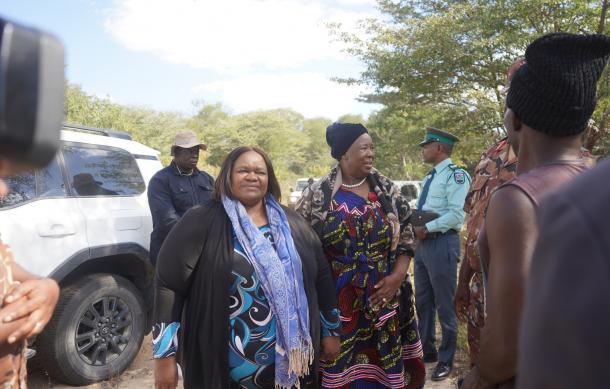
The Minister of Home Affairs, Immigration, Safety, and Security, Lucia Iipumbu, toured various border posts in the Zambezi Region.
These visits were aimed at assessing service delivery challenges.
Iipumbu first visited the Impalila, Machenje, Kasika, and Ngoma border posts and police stations in eastern Zambezi.
At a briefing at Impalila Island, Station Commander Inspector Mutonga Mwiya informed the minister that the station lacks holding cells for inmates and boats. The lack of boats inhibits police patrols in the island's surroundings.
"We have a problem with accommodation; most members are sharing rooms. In the rooms. And we don't have cells to keep inmates; we have to take inmates to Ngoma. So, in case sometimes the person is a Zambian, he needs to go by the like, now we have a flood; we have to go with a boat to Ngoma, but if it's a Namibian, we used to use the Kasane route, where we have a car that's parked there. The other challenge is that we are drinking water straight from the river."
In western Zambezi, the minister visited the Susuwe border post and the Singalamwe police station.
Iipumbu assured officials that they are addressing some of the concerns immediately.
"We also have taken note of the abandoned water project, which I think was also brought to our attention yesterday, and part of our mission here is to look at the status of that borehole that was being drilled there and also to get to understand why the project never got to be completed, and perhaps this one would be our priority above all priorities to look at where it got halted."
She added that other challenges are being addressed. "We have also noted the challenges of the boats that are not functional. I agree with an officer's suggestion that we don't need someone from Windhoek or Katima to fix the boat; if the boats are here, one of you just needs to go to training and, once trained, would be able to do the maintenance and minor repairs here."
Iipumbu added that the draft migration bill makes provision for spot fines depending on the seriousness of the crime instead of detaining offenders.